



Most clients hold on too long. They've already paid 40% of the contract, the demolition is done, and the thought of starting over with a new firm feels worse than whatever is currently going wrong. So they keep paying, keep waiting, and the project keeps getting worse.
Walking away from an interior design firm mid-project is expensive and painful. Sometimes it's still the right call. The question is knowing the difference between a project that has problems and a project that's actually finished, even though no one wants to admit it yet.
Signs the project is past saving
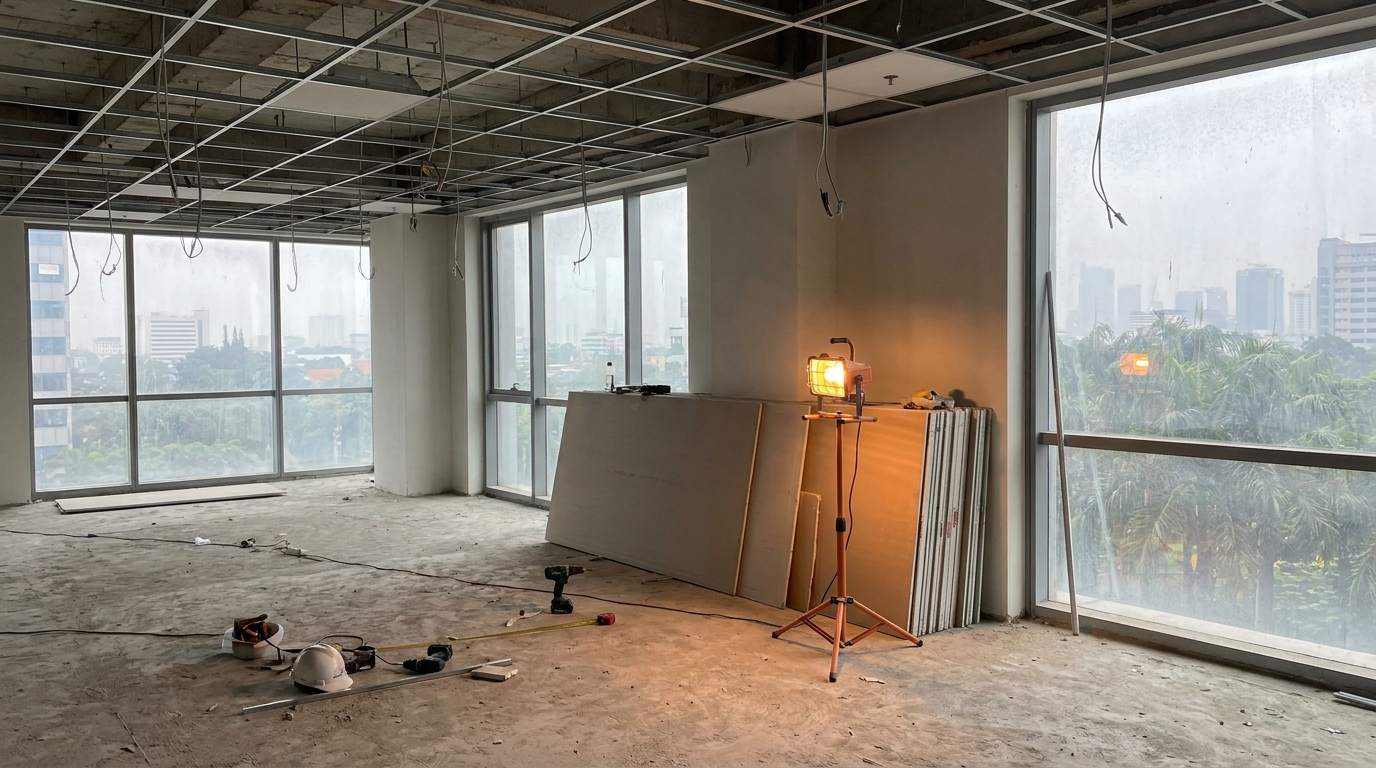
There's a difference between a firm that's behind schedule and a firm that's actively making your project worse. The first is recoverable. The second is not.
The clearest sign is when you stop being able to verify what's happening on site. The PM gives you progress percentages but can't show you specifically what was done that week. Site visits get rescheduled. Photos arrive late or not at all. When you ask direct questions, you get answers that sound reassuring but don't actually address what you asked.
Another sign is when defects start outnumbering completions. Walls go up crooked and have to come down. Tile work fails inspection. Electrical points are in the wrong locations because someone lost the latest drawings. If the firm is generating problems faster than they're solving them, more time will not fix this.
The third sign is financial. Subcontractors start contacting you directly because they haven't been paid. Materials stop arriving on site. The firm asks for advance payments outside the original milestone schedule. These are symptoms of a contractor who has lost control of their cash flow and is using your project to keep the rest of their business afloat.
When it's still worth fixing
A delayed project with clear, documented reasons is not a reason to walk. Permits take longer in Indonesia than anyone plans for. Building management can shut down your work for two weeks because of a complaint from a co-tenant. Material lead times slip when a supplier overcommits. None of this is the firm's fault.
A firm that flags problems early, proposes solutions, and offers a revised timeline in writing is acting professionally. That's worth keeping. Frustrating, but worth keeping.
The financial math of terminating
Before you fire anyone, run the numbers. Most clients underestimate the true cost of switching firms by half.
Your replacement firm will charge a premium to inherit work they didn't start. Expect 20-40% above market rate for the remaining scope. They have to inspect everything, redo anything that doesn't meet specification, and take responsibility for work they can't fully verify. That premium is rational. They're absorbing risk you can't quantify.
Then there's the work that needs to be redone. Even if the existing work looks fine on the surface, the new firm will be conservative. They'll tear out anything they can't certify. Electrical that wasn't installed to code. Tiling on a substrate that wasn't prepared properly. Joinery that doesn't match what the new firm would warranty. Plan for 15-25% of completed work to be redone, sometimes more.
Add legal costs if you're recovering deposits or pursuing breach of contract. Add the lost time. Add the project management overhead of running two transitions instead of one project.
A useful rule: if the remaining scope can be completed by the original firm in two months, finishing is almost always cheaper than switching. If the remaining scope is more than half the project and you've lost confidence in the team, switching often pencils out even with the premium.
Not sure if your current firm can still deliver? We can do an independent site assessment and give you a straight answer about what it would cost to finish versus switch.
How to terminate a contract properly
If you've decided to walk, do it cleanly. A messy termination gives the other side ammunition in any dispute that follows.
Document everything before you give notice
Photograph the entire site before any conversation about termination. Inventory all materials on site. Save every WhatsApp message, every email, every site report. Pull the contract and re-read the termination clauses. In Indonesia, construction agreements under Law No. 2 of 2017 on Construction Services should specify how termination works, what notice is required, and how retention and outstanding payments are handled.
If you act before you document, anything you find later will be contested. A firm that knows it's being terminated has every incentive to remove materials, dispute completion percentages, and rewrite the narrative of what happened.
Send formal written notice
Verbal termination is not termination. You need a written notice that references the specific contract clauses you're invoking, the breaches you're citing, and the response window you're giving. Send it by registered post or as a formal email with delivery confirmation. WhatsApp messages alone don't hold up.
Most contracts include a cure period: the firm has a defined window (often 14-30 days) to fix the problem before termination is final. Use this period to gather more evidence and prepare your replacement firm. If the firm cures the problem genuinely, you've avoided a costly switch. If they don't, your termination is on stronger ground.
Get an independent assessment
Bring in another firm or a qualified project manager to assess what's actually been built versus what was paid for. This is not about blame. It's about a defensible record of completion percentage, work quality, and any deviation from specification. You'll need this if there's a dispute over retention, outstanding payments, or refunds.
The same kind of red flags that should have triggered scrutiny at the proposal stage often show up clearly during a termination assessment. If you missed signs early, treat it as expensive tuition. The next contract you sign should look very different. The patterns that suggested trouble at the start, including the kinds of things that show up as warning signs in an interior design proposal, are usually the same patterns that led to where you are now.
Bringing in a replacement firm

Replacement firms are a different category from new-project firms. They need to inspect inherited work, certify what's salvageable, and warranty everything they finish. Not every firm will take this kind of job. The ones that will charge accordingly.
When you brief them, give them everything. Original drawings, the contract scope, material specifications, photos of the site at handover from the previous firm, any defect reports you've commissioned. The more they know upfront, the less discovery work they have to charge you for.
Be honest about what went wrong. Replacement firms have heard every version of "the previous contractor was terrible" and they discount it. What helps them is specifics: which trades performed well, which didn't, where the documentation is solid, where it isn't. A clear-eyed handover gets you a more accurate quote.
Expect the new firm to ask hard questions you didn't think about. Whether the existing electrical can support the planned load. Whether the substrate under the tiles was prepared correctly. Whether the MEP coordination was actually done or just claimed. These questions are how good firms protect themselves and you.
If the situation is more abandonment than termination, where the firm has effectively stopped working, the playbook is different. That scenario is closer to a firm that ghosts you mid-project and the priority shifts toward immediate documentation and recovery rather than formal contract termination.
Walking away is not failure
The hardest part of terminating an interior design firm mid-project isn't the financial cost. It's accepting that the original decision to hire them was wrong and that no amount of additional patience will change that.
A firm that can't deliver in months one through four will not suddenly deliver in month five. The signal is already there. The only question is how much more you're willing to spend before you act on it.
If you do walk, walk for the right reasons: a firm that has lost control, not a firm that has hit a hard week. Document the basis for termination. Do it through the contract, not through anger. And use the experience to change how you hire next time.
Need a second opinion before you make the call? We've assessed dozens of half-finished projects and can tell you whether walking away makes sense for your situation.