


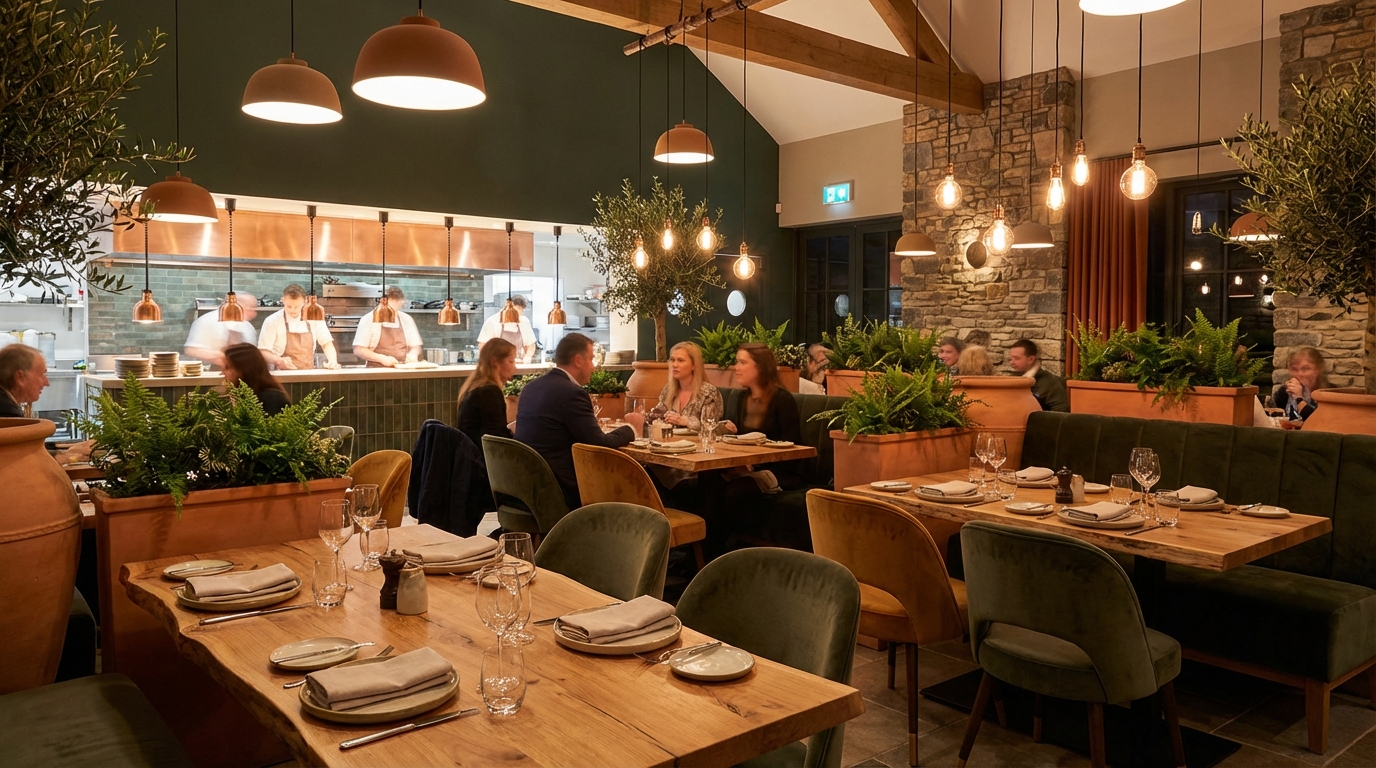
Most restaurant owners think good interior design means making a space look pretty. That's backwards. Good restaurant design makes you money.
A well-designed restaurant keeps customers longer, encourages them to order more, and turns first-time visitors into regulars. Research shows atmosphere ranks equal to food quality in customer satisfaction. Your interior isn't decoration. It's a revenue tool.
This article breaks down what actually works in modern restaurant design for Indonesia's climate and market. We'll cover design elements that drive customer behavior, deadly mistakes that kill Jakarta restaurants, and the budget reality of doing this properly.
What Makes Restaurant Design "Modern" in 2026
Modern restaurant design isn't about following the latest trend from Milan or Copenhagen. It's about creating experiences that make customers want to stay, spend, and come back.
The shift happened around 2020. Before that, restaurant design was mostly about looks. Now, successful restaurants design for behavior. Every element serves a purpose: getting customers to order more, stay longer, or share on social media.
The Shift from Decoration to Experience
Today's diners don't just book tables. They book moments. They scroll Instagram, read reviews, and choose restaurants based on atmosphere as much as menu. A quarter of Americans say a restaurant's social media appeal is extremely important. In Jakarta, that number is likely higher.
This means design becomes theater. Open kitchens aren't just trendy—they're entertainment. Lighting changes throughout the day to shift the mood. Every corner has depth that makes people want to photograph it.
The best restaurants tell stories. Not generic "local culture" stories, but specific ones. A grandmother's recipe that inspired the menu. A childhood memory of street food. When design connects to a real human story, customers feel it.
Why Indonesian Restaurant Owners Can't Copy Western Trends Directly
Here's a problem we see constantly: owners find a beautiful restaurant photo from Europe and want to recreate it in Jakarta. Six months later, timber facades are rotting. SPC flooring is warping.
Indonesia's tropical climate destroys many materials that work perfectly in temperate regions. High humidity, intense UV exposure, and constant heat create different challenges.
European-style timber exteriors grow fungus within months here. Popular herringbone SPC flooring warps because Indonesian humidity destroys the foam underlayer. Stone that looks beautiful in a showroom becomes dangerously slippery in Jakarta's humidity.
You can't just copy-paste Western design. You need to adapt it for tropical conditions while keeping the aesthetic appeal.
The Business Case: How Design Directly Impacts Your Revenue
First Impressions Drive 90% of Customer Decisions
Visual cues influence up to 90% of first impressions. Color alone affects nearly 85% of purchasing decisions. When a potential customer walks past your restaurant or sees it online, they make instant judgments about quality and price.
Your entrance design should immediately communicate what kind of experience customers can expect. A confused first impression means they walk past to the next option.
Why Atmosphere Ranks Equal to Food Quality
Multiple studies show four attributes drive restaurant choice: food, service, atmosphere, and price. Most owners assume food is most important. But research shows service and atmosphere have more significant impact on customer satisfaction and return visits.
Jakarta has hundreds of restaurants serving excellent food. When customers choose between them, atmosphere becomes the deciding factor. A poorly designed space—too noisy, uncomfortable seating, bad lighting—makes customers leave faster regardless of food quality.
A well-designed space does the opposite. Customers stay longer. They order dessert. They come back next week. The space literally increases your average check and customer lifetime value.
The Instagram Effect: When Customers Become Your Marketing Team
Twenty-five percent of Americans consider a restaurant's Instagram appeal extremely important. In Indonesia's social-media-obsessed market, this matters even more.
When customers photograph your space and share it, that's free marketing. But this only works if you design for it intentionally. Not with obvious "Instagram walls" that feel forced. With spaces that have visual depth—interesting angles, good lighting, compositional elements that make photos look good automatically.
The best restaurants generate constant social content because every corner is interesting. This isn't accidental. It's designed.
Seven Modern Design Elements That Actually Work in Jakarta's Climate
Open Kitchens as Theater
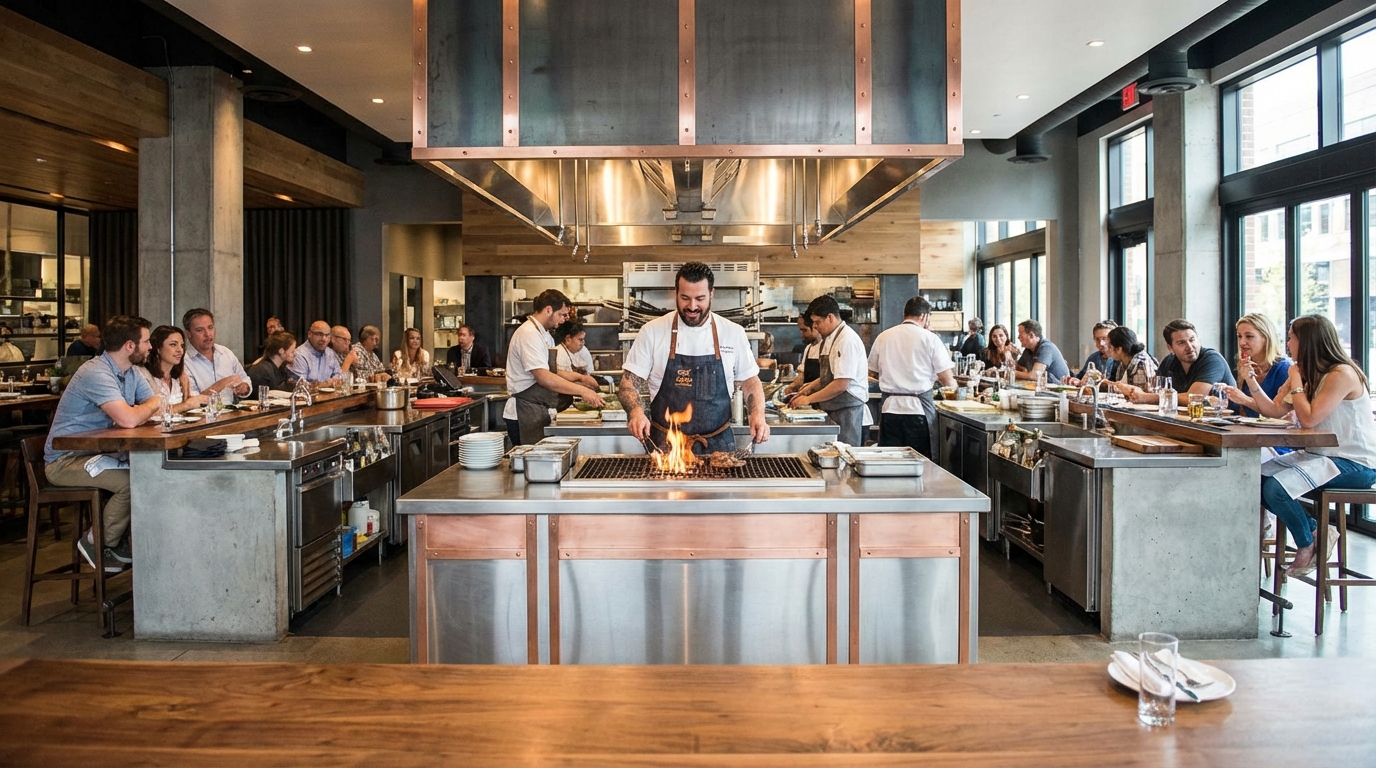
Open kitchens stopped being about "transparency" around 2020. Now they're the emotional and spatial core of restaurants. The entire kitchen becomes an island that the dining room wraps around.
This works because it gives customers something to watch. The chef becomes a performer. This keeps customers engaged during wait times and creates energy in the space.
But open kitchens require serious ventilation design. Jakarta's heat plus cooking heat plus customer density creates massive cooling demands. Your ventilation system must handle cooking odors, smoke, and excess heat without making the dining room uncomfortable.
The kitchen layout itself impacts service speed. An efficient kitchen follows logical one-directional traffic patterns: prep station to cooking station to service station. We've seen restaurants where the layout forced servers to cross through customer areas to reach the kitchen. That's bad design.
Strategic Lighting That Changes Throughout the Day
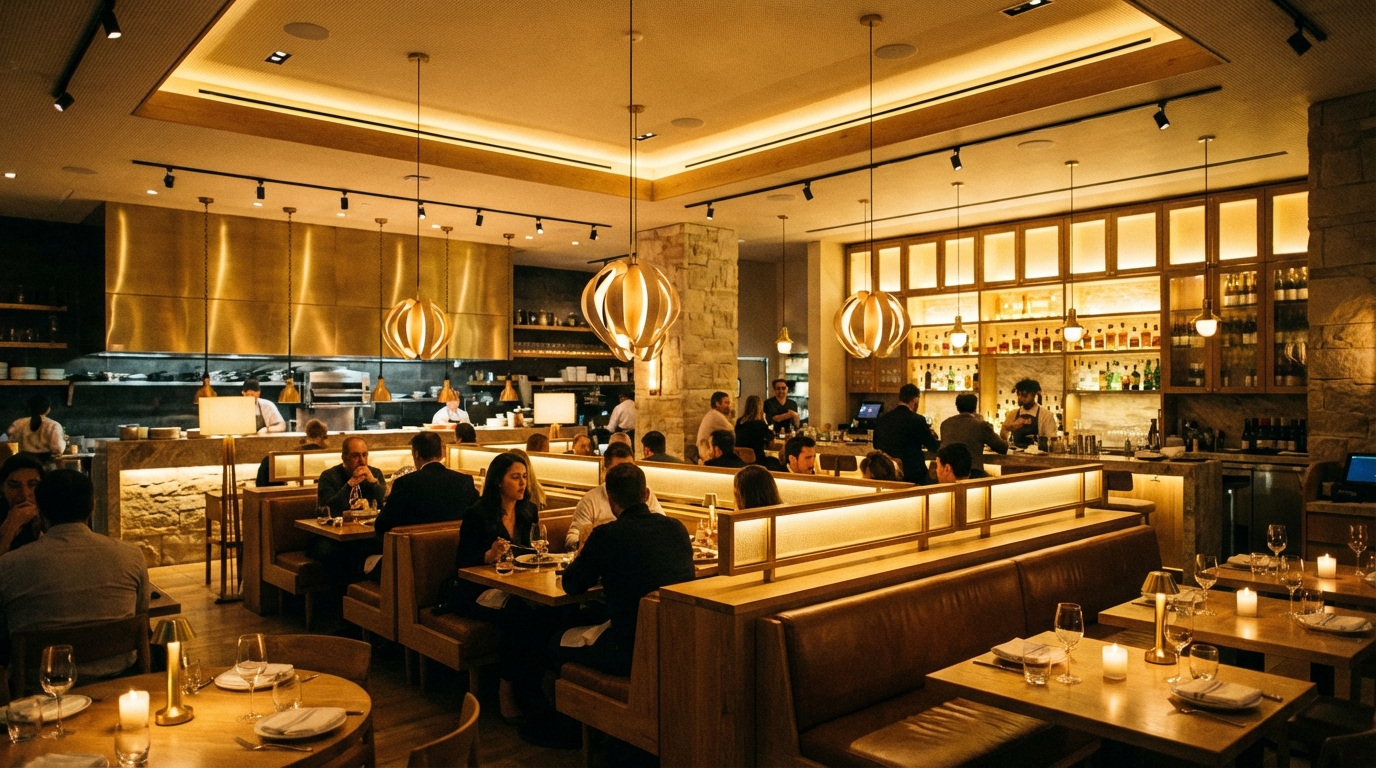
Lighting in 2026 is about emotional rhythm. The same space should feel different at lunch versus dinner versus late night. This is achieved through layers of light on different circuits and dimmers.
Most Jakarta restaurants make two mistakes: too dim (customers can't read menus) or too harsh (creates unflattering shadows). The goal is soft, layered lighting that flatters faces and food while providing adequate visibility.
Avoid pure white LED lights. They make food look unappetizing and people look sick. Warm-toned lighting (2700-3000K) stimulates appetite and creates welcoming atmosphere. This is why fast food chains use bright yellow-white lights (they want you to eat fast and leave) while fine dining uses warm amber tones (they want you to relax and stay).
Natural Materials That Survive Indonesian Humidity
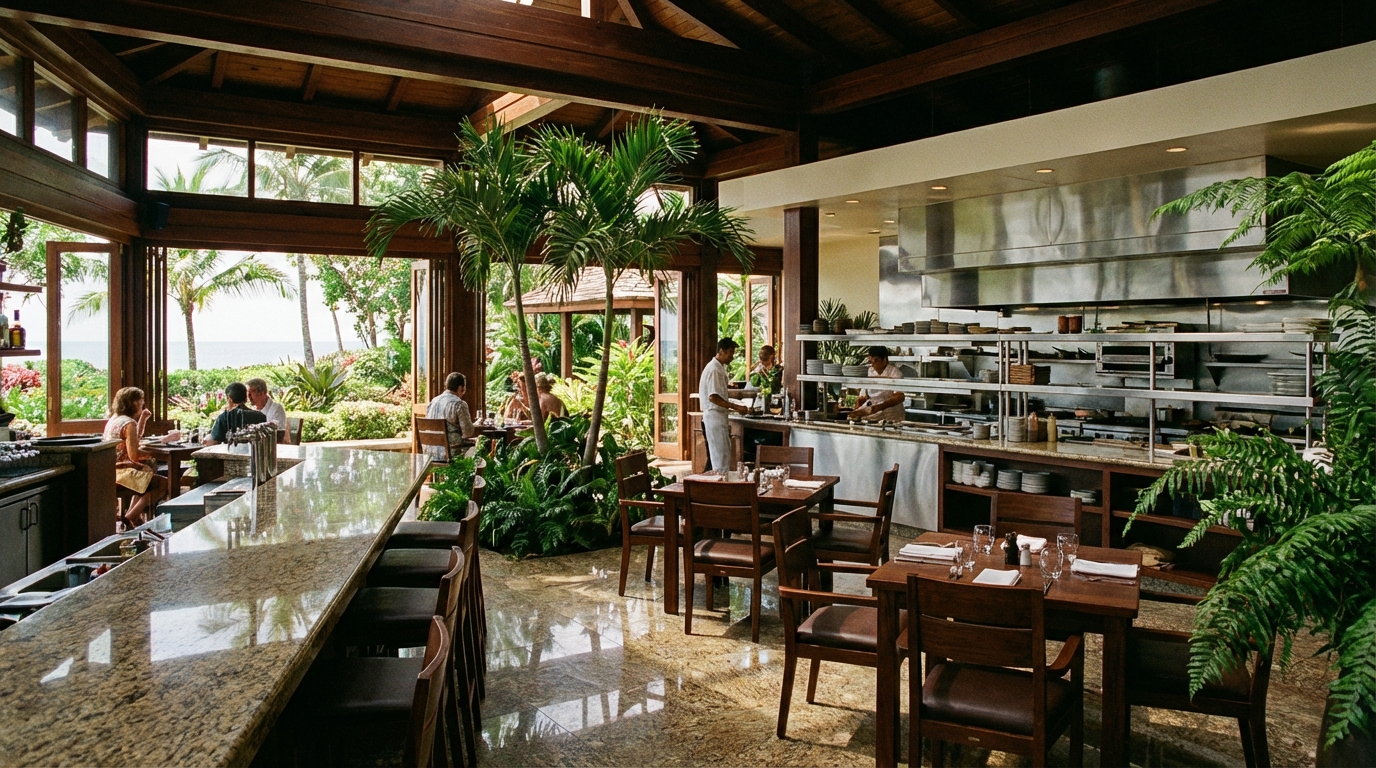
Natural materials create warmth and texture that customers respond to emotionally. Wood, stone, terracotta, linen—these materials signal quality. But in Indonesia's climate, you must choose carefully.
Marine-grade stainless steel survives Jakarta's humidity without rusting. Granite and certain stones resist moisture and UV exposure. Solid wood works if it's properly sealed and maintained.
Avoid materials with foam underlayers—they trap moisture and deteriorate quickly. SPC flooring is trending globally, but in Indonesian humidity the foam layer warps within months. We won't recommend materials just because they're trendy if they'll fail in six months.
The key question: will this material look good in two years, or will it look tired and damaged? Longevity matters. Replacing deteriorated materials costs money and closes your restaurant during renovations.
Acoustic Design That Lets Customers Actually Talk
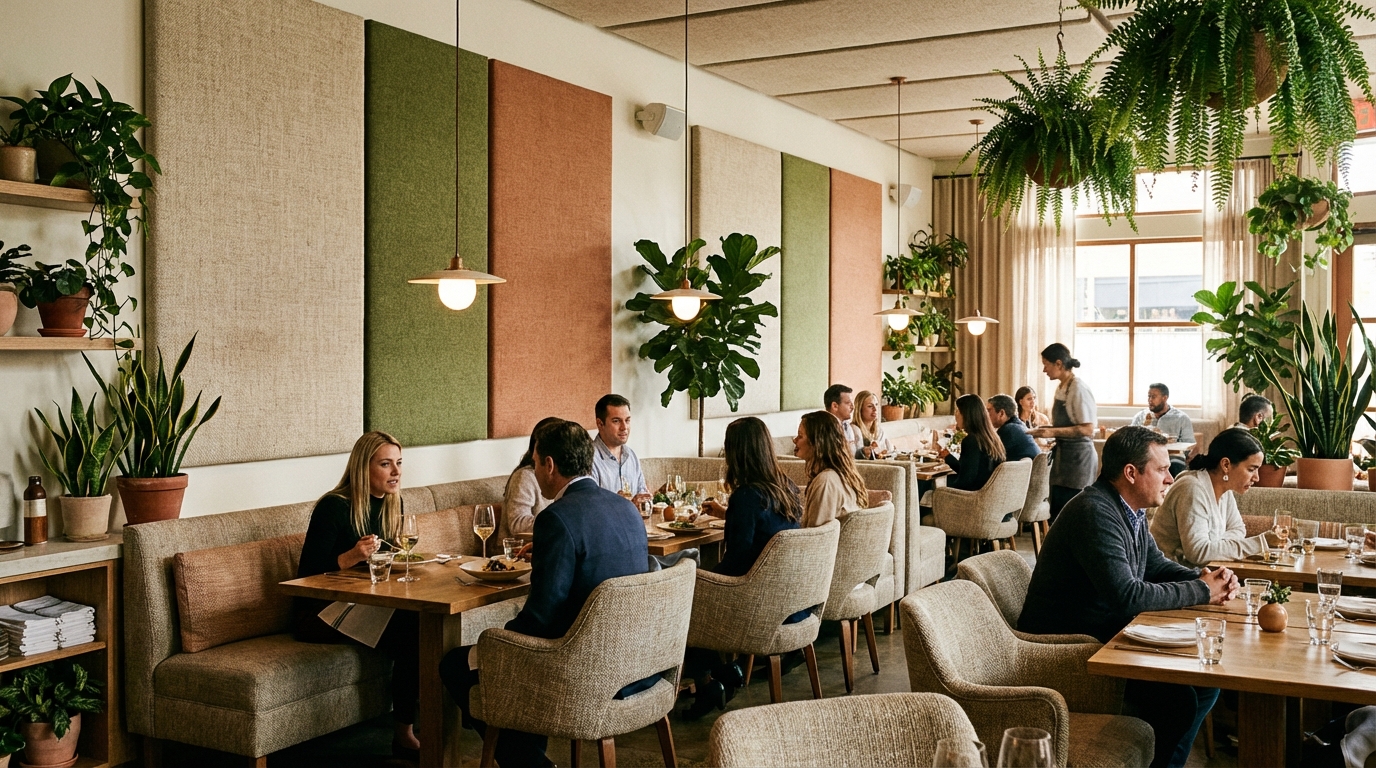
Many restaurant owners focus entirely on decor and completely ignore acoustics. Then they wonder why customers complain the space is too loud.
In open-concept restaurants with hard surfaces—concrete, tile, glass—sound bounces everywhere. Conversations become shouting matches. Groups leave earlier because they're exhausted from straining to hear.
Sound-absorbing materials fix this: fabric panels, acoustic ceiling tiles, upholstered furniture, curtains, plants. A well-balanced acoustic environment makes conversations pleasant without feeling dead.
The test is simple: can two people at a table talk comfortably without raising their voices during peak hours? If not, your acoustics need work. This directly impacts how long customers stay and whether they return.
Flexible Spaces for Groups and Private Events
Group dining increased 11% year-over-year, and 36% of diners want more private and group dining options. Your space should accommodate both intimate two-person dinners and 10-person celebrations.
This means movable partitions, stackable chairs, tables that can be combined or separated easily. Counter and bar seating work for solo diners, couples, and small groups.
The operational benefit: you can host private events without closing the entire restaurant. A movable partition creates a semi-private space for a birthday party while the rest of the dining room operates normally.
But flexibility only works if the furniture is actually movable. Heavy tables bolted to the floor aren't flexible.
Color Palettes That Stimulate Appetite
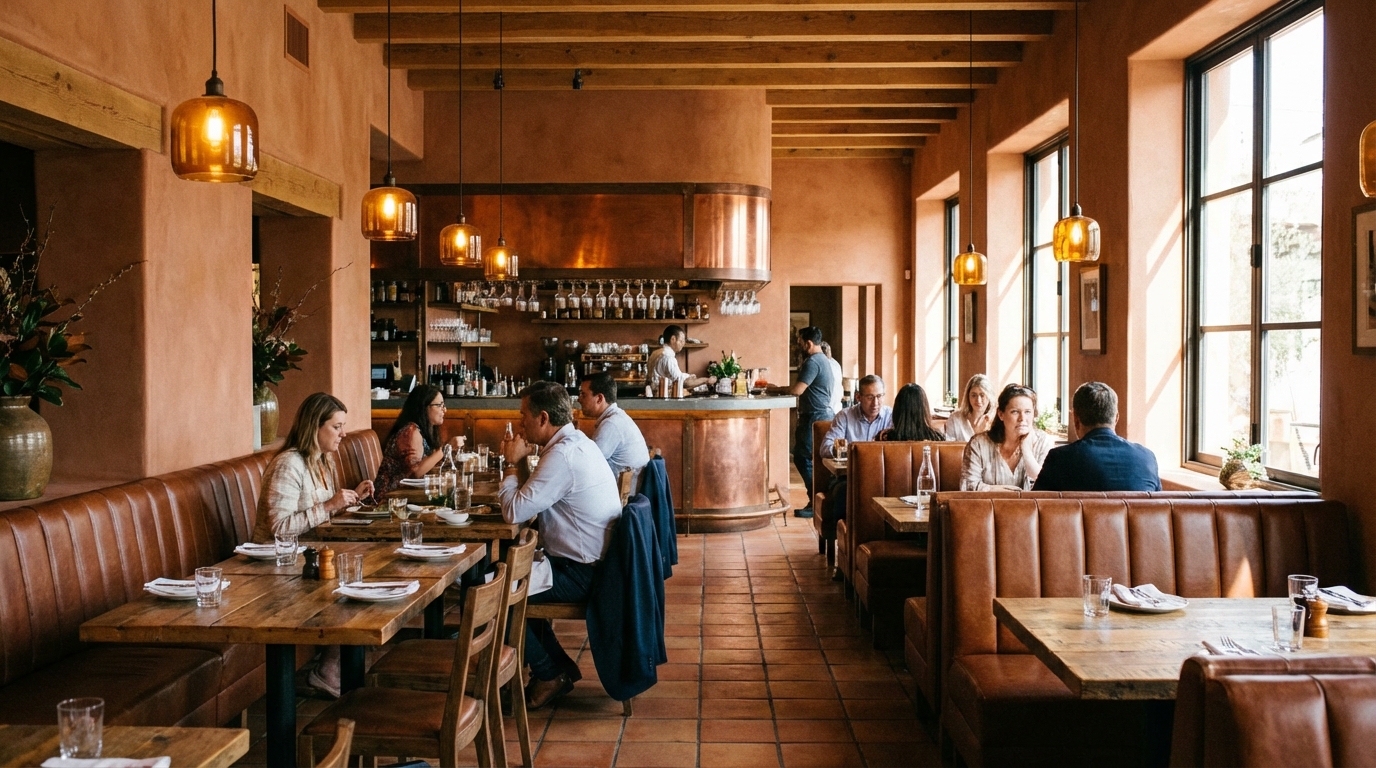
Red and yellow stimulate appetite—that's why fast food chains use them. But in fine dining, those colors feel cheap. The solution is warm earth tones: terracotta, deep amber, rich browns, muted oranges.
These colors have the appetite-stimulating warmth without the fast-food association. They pair well with natural materials and create intimate, welcoming atmosphere.
Blue generally suppresses appetite, making it risky for most restaurants. The key is balance. Warm tones boost appetite and encourage longer stays. Cool accent colors provide visual relief. Greenery adds fresh organic color that balances warm palettes naturally.
Social Media-Worthy Corners (Without Trying Too Hard)
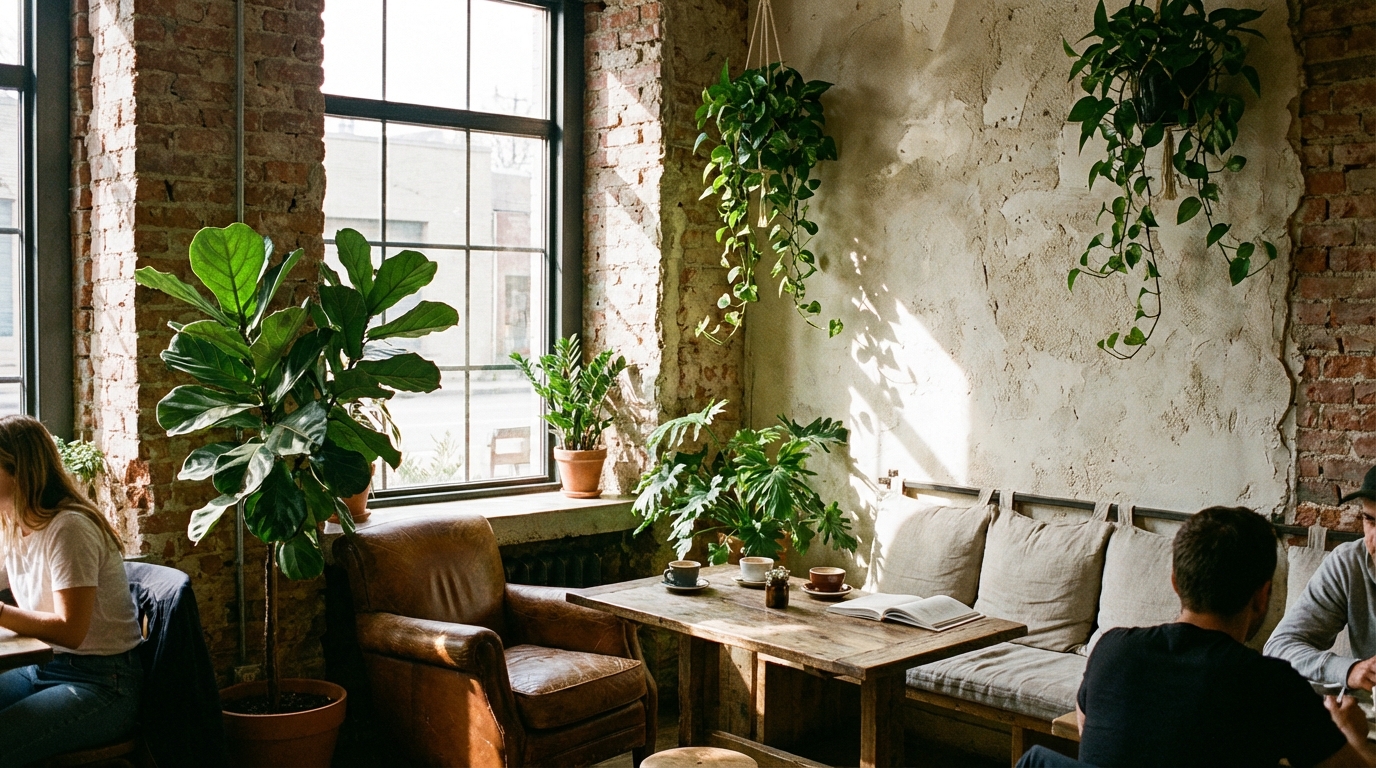
The worst Instagram walls are obvious—a neon sign saying something generic. These feel forced and dated quickly.
The best social media moments happen naturally when you design spaces with visual depth. Interesting angles. Good lighting. Textured walls that create dimension. Unique furniture pieces.
Bar areas work well because back-lit bottles create natural visual interest. Window seating gets beautiful natural light. Corners with greenery and textured walls create compositional depth.
The goal isn't creating designated photo spots. It's making the entire space photogenic from multiple angles. When customers can take good photos from their table without moving, they share more often.
The Five Deadly Mistakes Most Jakarta Restaurants Make
Furniture That Looks Good But Feels Terrible
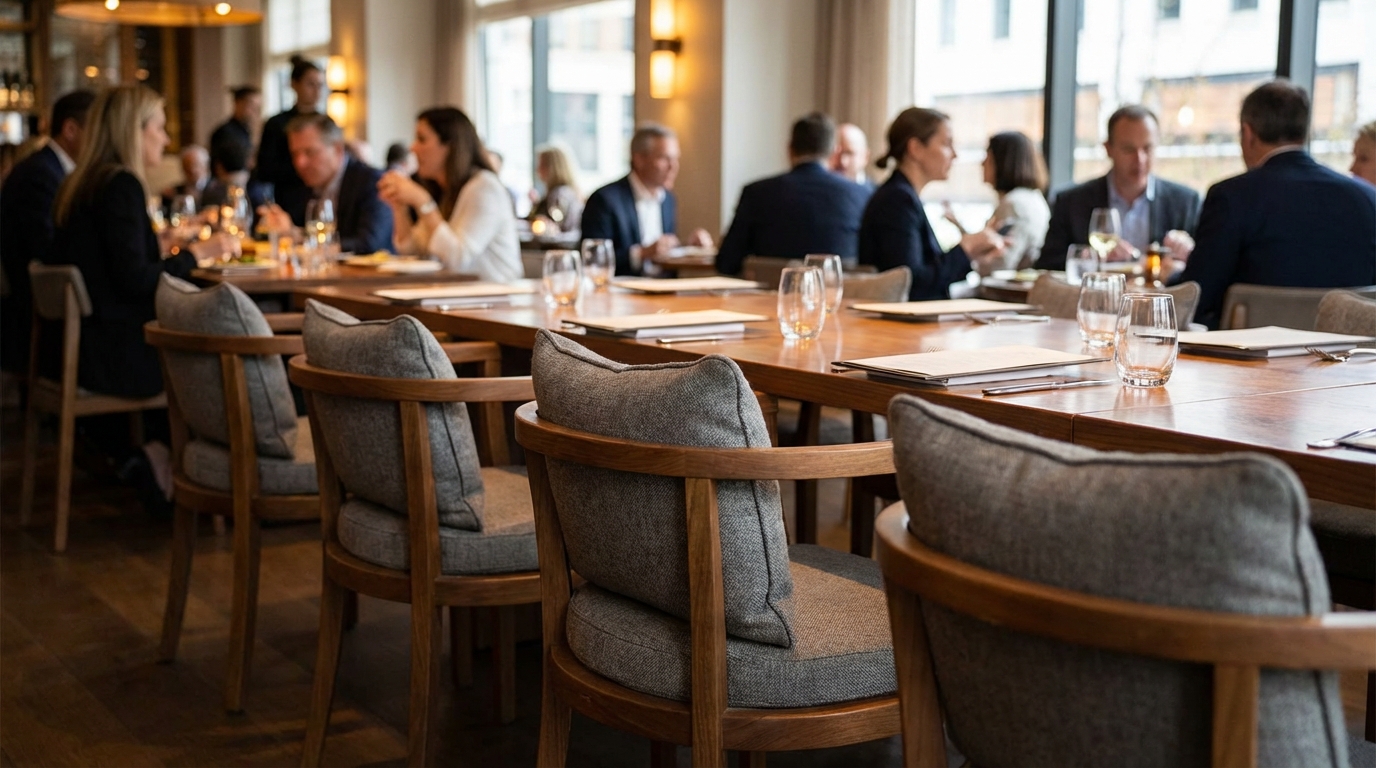
We see this constantly: owners choose chairs because they look modern, without ever sitting in them for an hour-long meal.
Standard dining table height is 28-30 inches. Restaurant chair seat height should be 17-19 inches. When chairs are too low, customers hunch forward. When too high, feet dangle uncomfortably.
Chair cushion firmness matters. Too soft and customers sink in awkwardly. Too hard and they're uncomfortable after 20 minutes.
Test your furniture by sitting through a full meal. If you're uncomfortable after 30 minutes, your customers will be too. Uncomfortable customers leave faster and order less.
Tables Placed Too Close Together
Jakarta restaurants often cram tables too close together to maximize seats. This backfires. Customers feel crowded and uncomfortable. Servers can't move efficiently.
Fine dining requires 18-20 square feet per person. Full-service casual requires 12-15 square feet per person. Trying to exceed these densities creates operational problems.
The math is simple: fewer comfortable seats that people want to sit in generate more revenue than maximum seats that feel cramped.
Kitchen Layouts That Slow Down Service
We've seen beautiful restaurant designs where the kitchen layout creates chaos during peak hours. Prep station is far from cooking station. Servers cross paths constantly.
Efficient kitchens follow logical one-directional workflow: prep to cook to plate to serve. Traffic patterns for kitchen staff should be separate from server routes.
Poor kitchen design costs money through slower service, more staff required, higher error rates, and customer complaints about wait times.
Ventilation That Can't Handle Tropical Heat and Cooking
Jakarta's base temperature plus cooking equipment heat plus customer body heat creates serious cooling demands. Many restaurants under-invest in HVAC and ventilation.
Open kitchens require even more ventilation capacity. Cooking odors and smoke must be exhausted without making the dining room smell like a food court.
Indonesian humidity compounds the problem. Without adequate ventilation and dehumidification, the space feels stuffy even if the temperature is technically acceptable.
The cost of undersized HVAC is ongoing: uncomfortable customers who leave quickly, bad online reviews, higher staff turnover. Install adequate capacity upfront.
Choosing Materials Based on Pinterest Instead of Climate
This is the mistake we see most often. Owners find beautiful photos online and want exactly that, without considering whether those materials work in Indonesia.
Timber facades that look stunning in European restaurants rot in Jakarta within months. Herringbone SPC flooring warps in Indonesian humidity. Certain stones become dangerously slippery.
The test for any material: will it survive two years of Indonesian heat, humidity, and UV exposure while still looking good? If the answer is uncertain, choose something else.
How to Know If Your Designer Actually Understands Restaurants
Questions They Should Ask Before Showing You Mood Boards
A good restaurant designer should ask about your business, not show you pretty pictures in the first meeting:
- What's your target customer? Specifically: age range, income level, why they're dining out.
- What's your cuisine and service style? Fine dining, casual, fast-casual, bar-focused?
- What's your realistic budget?
- What's your timeline?
- What are the building constraints? Service lift dimensions, floor location, building management rules.
If the designer is showing you mood boards and talking about "their vision" before asking these questions, that's a red flag.
Red Flags in the First Meeting
Be cautious if the designer:
- Does most of the talking instead of asking questions
- Shows you previous projects unrelated to restaurants
- Agrees with everything you say without offering guidance
- Doesn't mention operations, kitchen workflow, or service patterns
- Can't explain how design elements impact customer behavior or revenue
You're hiring expertise to guide you toward decisions that work operationally and financially.
Budget Reality Check: What Modern Restaurant Design Actually Costs
Quality Tiers for Indonesian Market
Jakarta market benchmarks (per square meter):
- Basic functional space: ~3 million rupiah
- Acceptable quality: 5-6 million rupiah
- Premium that makes customers say "wow": ~11 million rupiah
Most mid-market restaurants should budget 5-7 million rupiah per square meter. Going too cheap creates spaces that look cheap. Customers notice and adjust their perception of your food quality accordingly.
Where to Invest vs. Where to Save
Invest in what customers directly experience: furniture comfort, lighting quality, acoustic treatments, visible materials. These elements shape customer perception.
Invest in operational infrastructure: kitchen layout, ventilation, access routes. These affect daily operations and cost money if they're wrong.
You can save on hidden structural elements and back-of-house finishes customers never see.
Don't save on anything climate-related, anything ergonomic, or anything operational. Skimping on these creates ongoing problems that cost more to fix later.
Ready to design a restaurant that drives revenue, not just compliments? Our team specializes in commercial interiors that work for Jakarta's climate and your business goals. Let's discuss how logic-based design can transform your space.
Conclusion: Design for Your Customer, Not Your Ego
The best restaurant design isn't about impressing other designers or creating something Instagram-famous. It's about creating a space that serves your target customer and supports your business operations.
Ask yourself: will this design make customers comfortable enough to stay longer? Does it support efficient service during peak hours? Will these materials survive Jakarta's climate? Does the space tell a story that matches my brand?
If you're choosing design elements because you personally like them, or because they're trending in other countries, or because they'll photograph well—stop. Those are the wrong reasons.
Choose design elements because they'll make your target customer want to return. Because they'll survive two years of hard use. Because they'll support your staff in delivering excellent service.
The restaurants that succeed long-term aren't the trendiest. They're the ones that create comfortable, functional spaces that make customers feel good, serve great food efficiently, and remain pleasant to visit month after month. That requires logic in design, not just aesthetics.
Need a restaurant design that actually works in Indonesia's tropical climate? At Interiologic, we've completed 700+ commercial projects including restaurants, F&B venues, and hospitality spaces. We understand what survives Jakarta's humidity and what drives customer behavior. Let's create a space that turns first-time visitors into regulars.
Start your consultation on WhatsApp